3) Objective: To learn and understand the symptoms and diagnostic criteria associated with feeding and swallowing disorders in children as well as the types of treatment used.
Activities and Resources:
· Read literature and internet research on the disorder.
· Discuss common causes and symptoms with my supervisor.
· Shadow or observe professionals performing the therapy.
Evidence:
· Include an informational guide with a list of resources as well as a log of case studies of techniques used when working with my clients.
After seeing many children come into session with feeding disorders I was motivated to research the topic. There are so many underlying reasons as to why children will not eat. This was yet another topic that was not covered in my undergraduate studies and because of that I was very interested in the topic. I never realized how serious this topic was until I interned at Alphabet Soup. Many children that I had observed were considered failure to thrive which can be very scary for parents. Being able to help these children was very gratifying and I loved being able to observe their progress.Through this research I learned about the causes as well as techniques that will help me in the future if I am to work with feeding clients.
What is a Feeding Disorder?
A feeding disorder is any difficulty or inability to consume adequate calories or age appropriate diet, as well as the refusal of certain foods and textures. It can also include swallowing difficulty, delayed feeding development, and food or swallowing phobias. Disorders range from picky eaters to children with severe disabilities. “Current research indicates that feeding disorders affect approximately 25-40% of children, from newborns to adolescents.” [i] For those children that are diagnosed with developmental disabilities, “approximately 80% will have a feeding problem.”[ii] Some underlying conditions can include :
Autism
Broncho-pulmonary dysplasia (BPD)
Cystic Fibrosis
Dysphagia
Failure to Thrive
Food Allergies
Gastroiesophageal Motility Disorders
Gastrointestinal Pain
Gastroesophageal Reflux (Emesis)
Genetic Syndromes
Human Immune Deficiency Virus
Reactive Airway Diseases
Metabolic Disorders
Oral-Motor Dysfunction
Prematurity
Short Bowel Syndrome
Status Post Organ Transplant
It is important for the person evaluating to look at the oral-motor skills of the child and their swallowing to determine if there is a physical problem or a lack of oral-motor skills that may be interfering with the child’s ability to eat. One major factor that many infants and children suffer from is GERD which stands for Gastroesophageal Reflux Disease. “GERD may cause delayed feeding skills because the pain that they experience is associated with feeding which causes them to refuse feeding altogether or refuse certain types or textures of foods. Because of this they don't gain the needed oral-motor experience to develop the physical skills needed to safely consume the type of diet they should be consuming.”[iii] Another large contributing factor is tonsil and adenoid size. Children with enlarged tonsils and adenoids have a fear of eating and gag on a lot of food. It is also important to look at the child’s diet to see what is being offered and accepted, as well as amounts consumed which contributes to growth concerns and nutritional deficits.
[i] "Feeding Disorders." New Jersey Pediatric Feeding Associates. 2008. Web. 08 Apr. 2011. <http://www.njpfa.com/services/feedingtherapy.html>
[ii] "Feeding Disorders." New Jersey Pediatric Feeding Associates. 2008. Web. 08 Apr. 2011. <http://www.njpfa.com/services/feedingtherapy.html>
[iii] Tyler, Pamela. "What Is Feeding Therapy?" PAGER Home. 19 July 2005. Web. 08 Apr. 2011. <http://www.reflux.org/reflux/webdoc01.nsf/(vwWebPage)/Feedingtherapy.htm?OpenDocument>.
Evidence #1
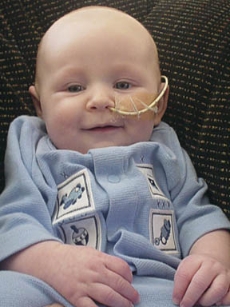
How does reflux contribute to a feeding disorder?
I had observed many children with a reflux disorder. Many which were reflux babies and had been put on medication from birth. Many of these children do not like to eat because it has caused them pain or has made them gag. Since feeding had caused them pain they “attempt to get the feeding process over quickly as possible so they do not take to the time to use the physical skills needed to eat safely. Some children with GERD may also require tube feedings again reducing their exposure to oral-motor experiences and effecting their feeding skill development.”[i]GERD can cause so much pain that behavioral symptoms of food refusal, selectivity and oral sensitivity can negatively impact growth and can lead to delayed acquisition of feeding skills.
There are many children that I observed that had a reflux disorder and many of them had feeding tubes and could be considered failure to thrive. Since reflux can delay feeding skills, a lot of oral motor was done to help them. In session we started off with chewy tubes and then moved on to trying to get them to taste foods and then finally to trying different textures of food. We used songs and toys to help get near the child’s mouth. We started off with kisses on the food and then slowly worked our way to getting them to put the food in their mouth. "Although feeding therapy can be effective in addressing many types of feeding difficulties, without effective pain management, oral-motor, sensory and behavioral feeding interventions may yield disappointing, ineffective results.”[ii]
[i] Tyler, Pamela. "What Is Feeding Therapy?" PAGER Home. 19 July 2005. Web. 08 Apr. 2011. <http://www.reflux.org/reflux/webdoc01.nsf/(vwWebPage)/Feedingtherapy.htm?OpenDocument>.
[ii] Tyler, Pamela. "What Is Feeding Therapy?" PAGER Home. 19 July 2005. Web. 08 Apr. 2011. <http://www.reflux.org/reflux/webdoc01.nsf/(vwWebPage)/Feedingtherapy.htm?OpenDocument>.
Evidence #2
 |  |
What are some feeding techniques?
When we had children who had oral motor and sensory deficits they had a hard time finding the food in their mouth. They had minimal sensation in their cheeks and lips and this made it hard for them to swallow food. I had observed two boys who had difficulty chewing and swallowing on their own. The first technique that I used was the use of a tool such as a z-vibe or a chewy tube to aid them. The chewy tube helped put the food back on their teeth so it could be chewed and the z-vibe put sensation into the mouth so that the food in the cheeks could be recognized and swallowed. Secondly, I used something crunchy such as a Veggie Stick which helped with chewing. It added additional flavor so the bolus (chewed food) could be found in the mouth and the texture helped with chewing. Lastly, things such as chocolate or other candies were used to locate food. We used this technique with one of the boys. When food was over-chewed and had lost its flavor it was much harder to swallow so with the help of an M&M the food could be found in the mouth. Once the oral-motor skills had come into play and they could chew accurately and gained full movement of their tongue, the amount of help was reduced so that they could practice eating meals on their own. We had them practice completing a meal within a certain time frame as well.
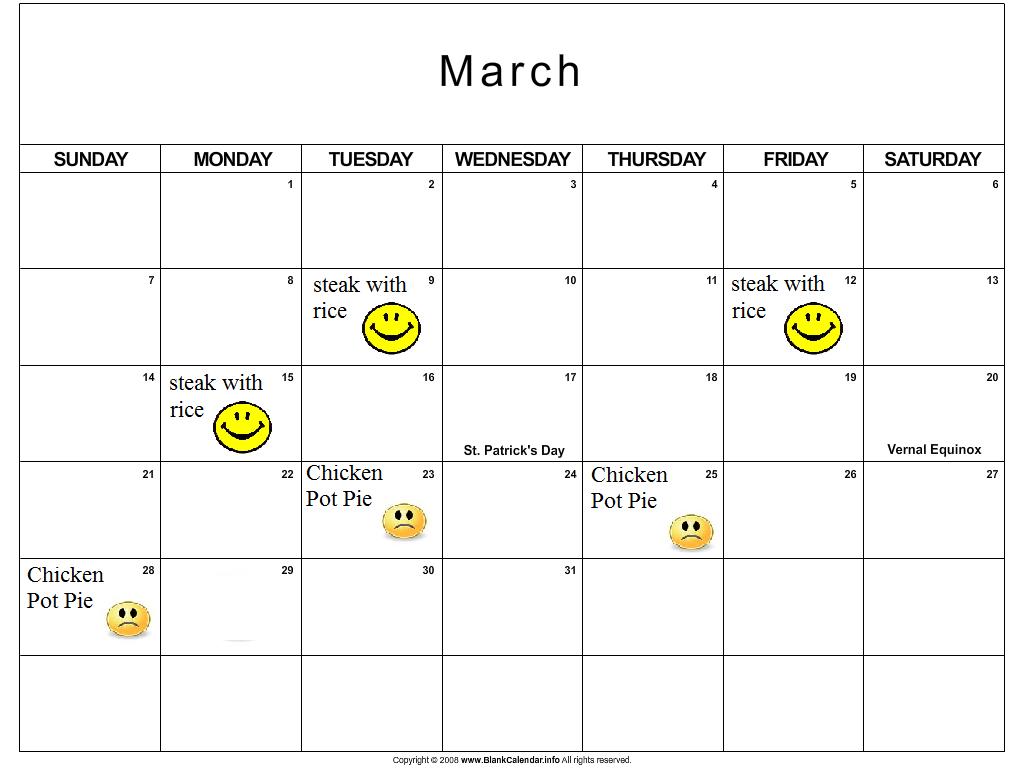
In addition to techniques that helped, I had come up with a reward system and a way to track the child's progress. When trying a food for the first time it is important to try it three to five more times until you'll actually known if you like it. So with that being said I created a chart system. If a new item was tried during session they then had to go home and try it at least three times and rate the food. So above is a chart that one boy had done for me and he used smiley faces to indicate if he liked them or not. If the assignment was completed at home and the child did not like the food they would not have to eat it again in session.
Evidence #3
 |  |
Is Tonsil and Adenoid size a Contributing Factor?
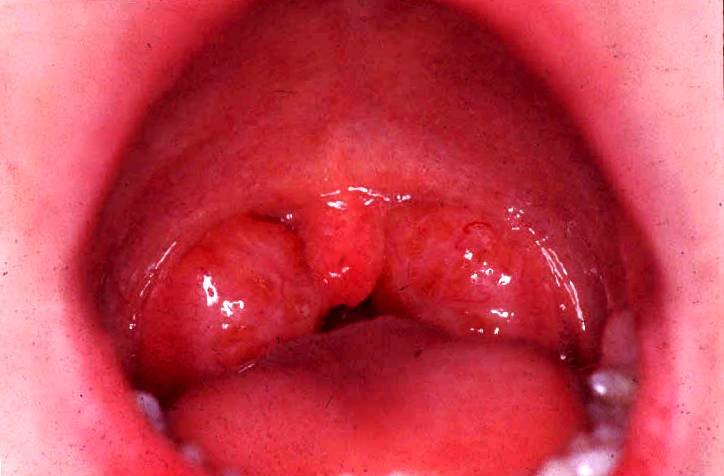
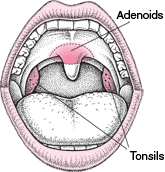
So many of the children that I saw from day to day were treated for feeding and it was important to make sure that the children were anatomically capable of eating before pushing them to do so. We suggested that
the children were referred to an ENT to check the size of their tonsils. Tonsils
range on a scale from zero to four, four being the largest. “The size and
percentage of the obstruction should be recorded using the scale 0 to +4. 0
means the tonsil is in the fossa; +1 means less than 25% obstruction; +2 is
less than 50%; +3 is less than 75% and +4 is more than 75% obstruction.” Many
of the children that were seen had enlarged tonsils and it was up to the parents and
physician to approve removal.”[i]
Children with enlarged tonsils can show signs of sleep apnea, excessive drooling, difficulty feeding, mouth breathing, noisy respiration, night terrors, and poor school performance. Many physicians will not take out tonsils unless sleep apnea occurs, so many of times a sleep study must be done. The removal of tonsils in the case of feeding is very vital because the children refuse to eat because the food cannot pass through their tonsils. We first try oral-motor therapy to try and resolve the problem, but there is only so much that can be done when there is an anatomical obstruction.
There is one boy that I had observed who is a perfect example of an anatomical obstruction. This boy was a twin and both him and his brother had no disabilities, they only had enlarged tonsils. One had had them removed and was discharged from therapy and the other still had his tonsils and had been attending therapy. His mother had seen how the surgery had helped his brother and even though their physician did not approve she had made it a point to get his removed.
[i] "Hypertrophic Tonsil." Chinese Child Health International. Web. 08 Apr. 2011. <http://www.cchi.com.hk/symposia/s3_ear_1.htm>.
